Starlink Global Coverage: Constellation Map, Active Countries, and Real-World Limits (2026)
On this page
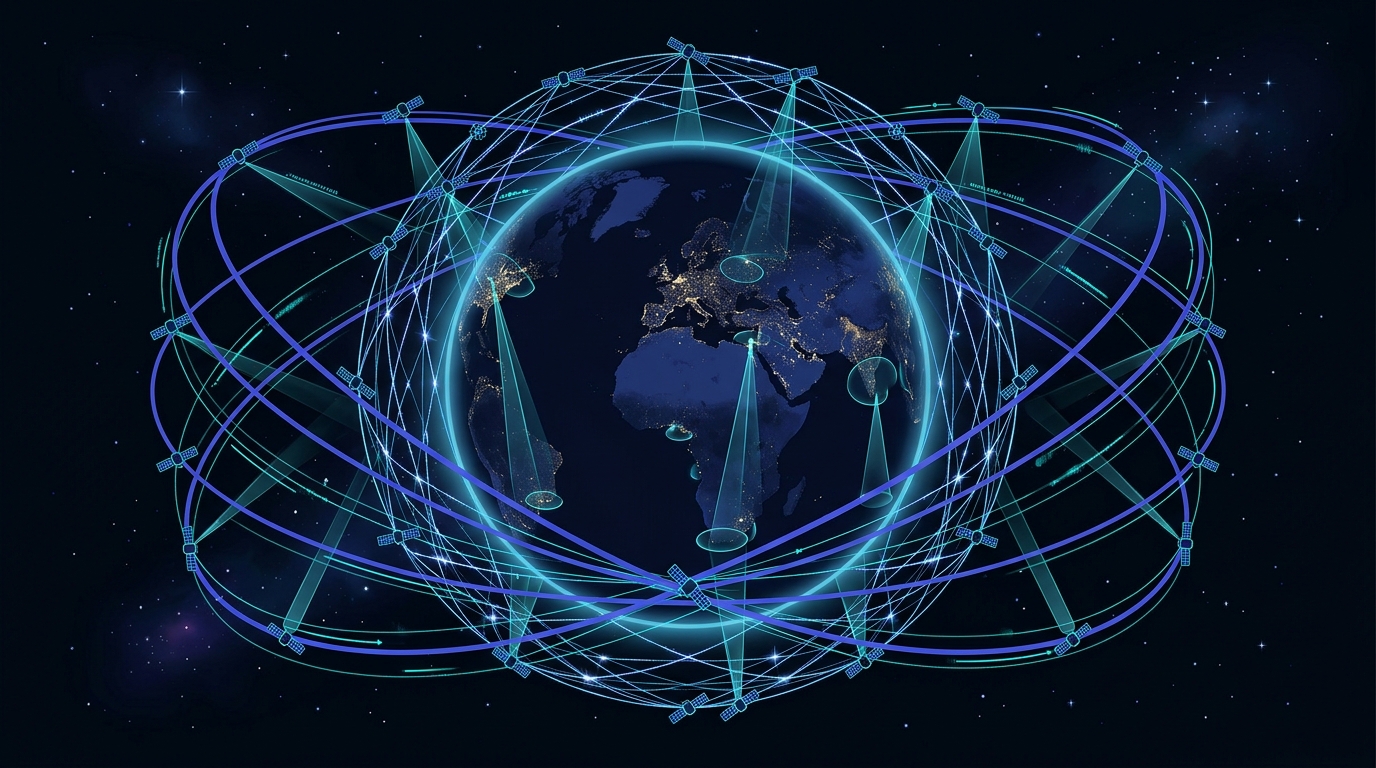
Starlink now operates more than 6,700 active low-Earth orbit (LEO) satellites, providing high-speed, low-latency satellite internet across more than 110 authorized countries and all seven continents. By flying at an altitude of approximately 550 kilometers and communicating across optical space lasers, the constellation delivers median download speeds between 75 and 220 Mbps with latencies under 45 milliseconds. This Starlink constellation network replaces traditional single-satellite geostationary delays with an interconnected orbital mesh that reaches from isolated Alaskan villages to remote research stations in Antarctica.
How the Low-Earth Orbit Mesh Delivers Global Low Latency
Traditional satellite internet relies on massive geostationary satellites parked 35,786 kilometers above the equator. That immense distance forces signals to make a 70,000-kilometer round trip, baking in unavoidable 600ms+ latency. In contrast, Starlink satellites orbit at roughly 550 kilometers, slashing physical signal transit times to a fraction of a second. Fresh satellite batches launched into low orbit often appear as a luminous Starlink satellite train before raising their orbits to join the active operational shell.
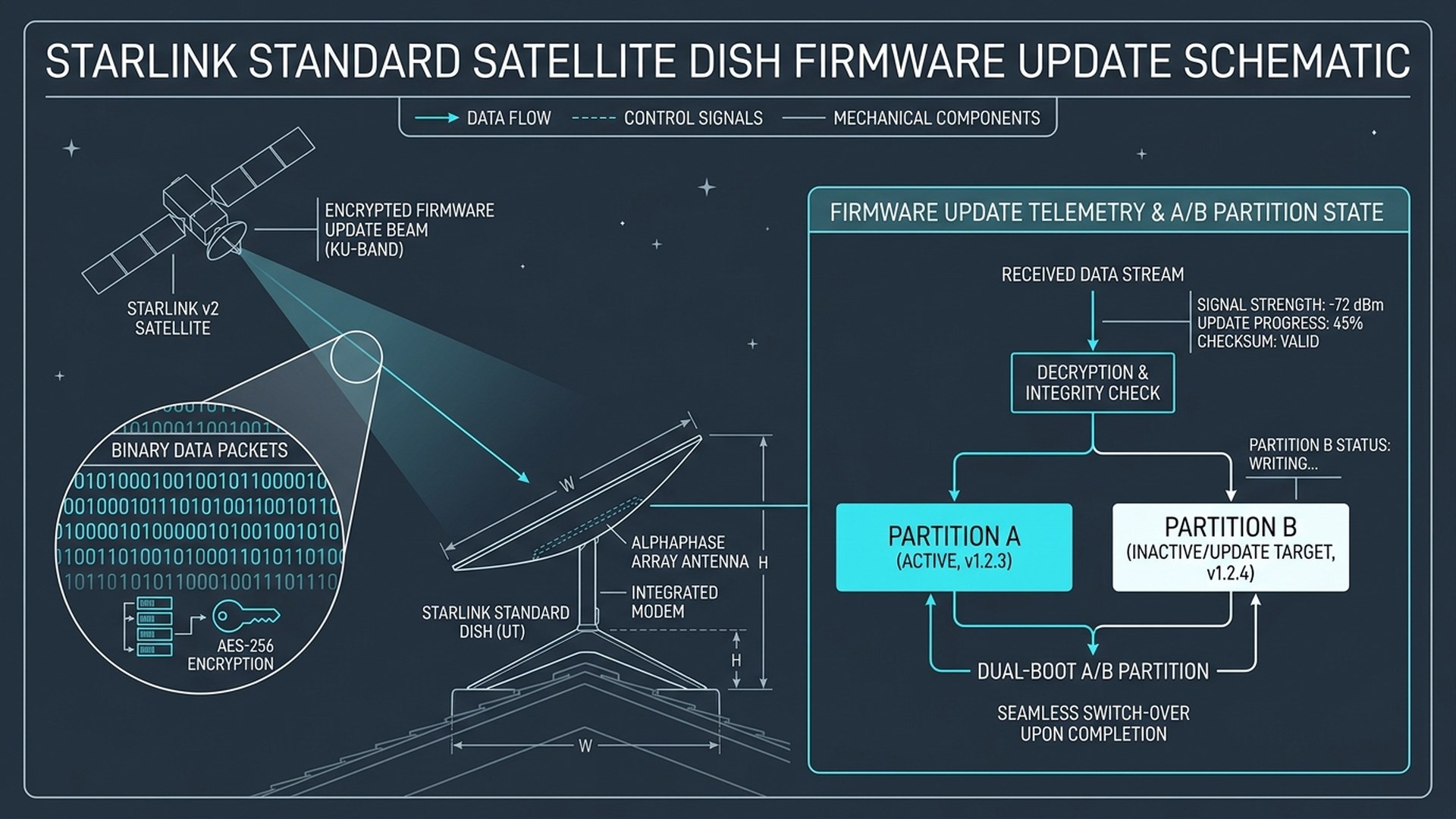
Early Starlink generations required a direct line of sight to both the user terminal and a ground gateway station simultaneously (a 'bent-pipe' architecture). Modern Gen 2 Mini satellites feature optical inter-satellite links (ISLs)—custom space lasers that route data directly between satellites at 100+ Gbps at the speed of light in vacuum. This laser backbone allows a dish in the middle of the Pacific Ocean or over the North Pole to route data seamlessly to a ground station thousands of miles away on another continent. Continuous Starlink firmware updates dynamically optimize phased-array beam handoffs every 15 seconds without dropping active video calls or voice sessions.
2026 Worldwide Coverage & Regional Performance Comparison
Availability, ground station density, and local telecom licensing create distinct performance profiles across global regions. The following comparison matrix breaks down real-world coverage metrics across the major operating territories:
| Global Region | Active Countries | Median Download | Median Latency | Primary Use Case |
|---|---|---|---|---|
| North America (US & Canada) | 2 countries + territories | 80 – 180 Mbps | 28 – 42 ms | Rural residential, RV travel, off-grid boondocking |
| Europe (UK, EU, Nordics) | 35+ countries | 120 – 240 Mbps | 25 – 38 ms | Rural estates, remote work, maritime coastal |
| Latin America & Caribbean | 22+ countries (Brazil, Chile, etc.) | 90 – 210 Mbps | 32 – 48 ms | Amazon basin, agriculture, island connectivity |
| Sub-Saharan Africa | 15+ countries (Kenya, Nigeria, etc.) | 70 – 160 Mbps | 38 – 55 ms | Community clinics, off-grid schools, eco-tourism |
| Asia-Pacific & Oceania | 12+ countries (Aus, NZ, Japan, PH) | 110 – 220 Mbps | 26 – 40 ms | Outback stations, archipelagos, emergency response |
| Global Oceans & Aviation | Worldwide Open Ocean Coverage | 100 – 220 Mbps | 35 – 50 ms | Commercial cargo, superyachts, airline in-flight Wi-Fi |
Direct-to-Cell: Satellite Connectivity for Standard Smartphones
Beyond dedicated dish terminals, SpaceX has deployed Direct-to-Cell (DTC) payloads aboard its newer satellite launches. These satellites act as orbiting cell towers equipped with custom eNodeB modems operating within standard LTE frequency bands. As part of SpaceX's broader Starlink infrastructure, mobile carriers including T-Mobile in the US, Rogers in Canada, and Optus in Australia provide emergency SMS and basic text messaging in cellular dead zones without requiring specialized hardware or external antennas on consumer smartphones.
Regulatory Roadblocks, Geofencing, and the 60-Day Roam Policy
While Starlink satellites orbit above every corner of the Earth, the service cannot legally emit radio frequencies into a country without explicit telecommunications licensing and spectrum allocation. Regulatory hurdles have delayed rollouts in key markets like South Africa (due to equity ownership requirements) and India (pending final security clearance). If you plan to travel with a Roam kit, you can manage your subscription with Starlink Pause or Standby Mode to avoid paying for regional roaming when parked at home.
Frequently Asked Questions About Global Starlink Coverage
Does Starlink provide coverage in every country worldwide?
No. Although the satellite constellation physically circles the entire globe, Starlink only operates in countries where it has received official government licensing and spectrum authorization. Countries under strict US trade embargoes (such as Russia, China, Iran, North Korea, Syria, and Cuba) or nations with unresolved telecom regulatory frameworks remain geofenced and inactive.
How do optical space lasers improve ocean and remote connectivity?
Optical inter-satellite lasers allow satellites to transmit data directly to adjacent satellites in orbit at the speed of light in vacuum (roughly 300,000 km/s). This eliminates the need for ground stations every few hundred miles, enabling seamless connectivity across oceans, polar regions, and unpopulated wilderness.
Can I use a Starlink Mini terminal while traveling internationally?
Yes. Starlink Mini is specifically engineered for global mobility, featuring an integrated Wi-Fi router, 1.1 kg backpackable form factor, and low 25 to 40 watt power draw. When paired with a Regional or Global Roam plan, it connects across all authorized countries subject to the standard 60-day roaming policy.