
How to check Starlink obstructions before installation?
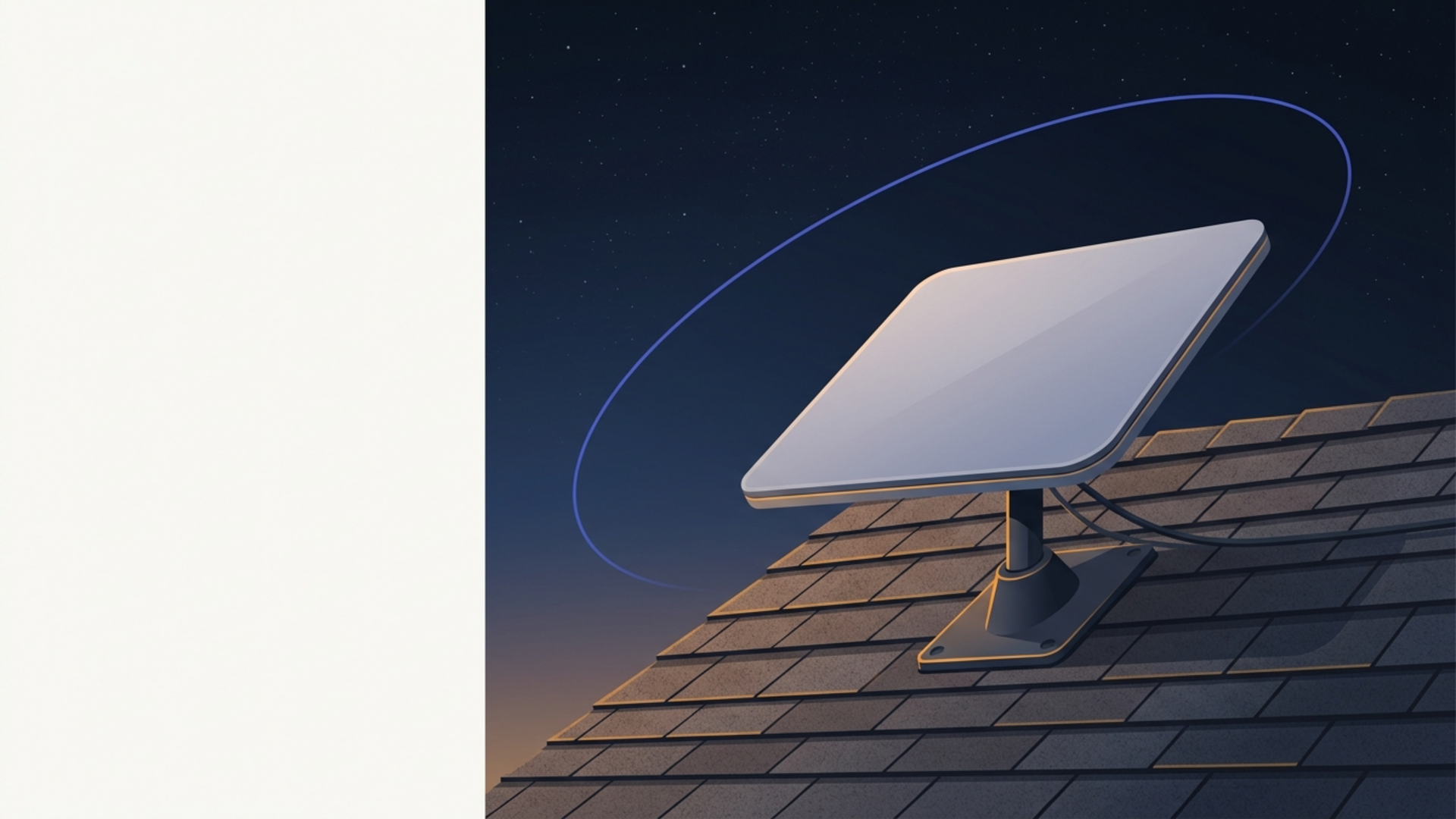
Use the Starlink app at the proposed installation location and look for a clear view of the sky before you mount a Standard 4 kit. Read the obstruction map before you commit to a mount. Related how-tos live in the published Guide section.
This guide covers ground-accessible checks only. It does not provide roof-access instructions.
How should the proposed location be checked?
Use the Starlink app's obstruction-checking feature at the proposed installation location. For Standard 4 hardware, the official Standard 4 kit installation guide says to select a location with a clear view of the sky and run the obstruction scan before mounting.
This pre-mount scan is the first decision in a Starlink installation. After the location check, the DIY Starlink setup guide covers kit assembly and a temporary placement before a permanent mount.
Pre-installation checklist
- On Android, get the Starlink app from the Google Play listing published by Space Exploration Technologies Corp.
- Take the phone to the proposed antenna location without climbing onto a roof.
- Run the app's obstruction check before mounting the Standard 4 kit.
- Review the obstruction map and note which portions of the required sky view are marked as obstructed or available.
- Use that result to decide whether the proposed location provides the clear sky view specified in the Standard 4 guide.
The official sources used here do not give a numeric obstruction threshold, outage estimate, scan duration, or color-key description.
What are the ground-mount and roof-mount boundaries?
Evaluate the proposed installation location before mounting. This guide assumes the intended antenna position can be represented while you remain safely on the ground.
- Ground-mount assumption: Run the scan at the proposed location when it can be reached without climbing.
- Roof-mount boundary: Do not climb onto a roof based on this article. It contains no instructions for ladders, fall protection, structural assessment, grounding, or permits. If evaluating the intended roof position requires leaving the ground, stop and seek qualified installation help.
A ground-level scan is not proof of conditions at a different roof position.
What does the obstruction map establish?
The map distinguishes obstructed portions of the antenna's required sky view from portions available to it. It does not establish a numeric pass threshold or predict service interruptions. For a wider discussion of trees, buildings, and later diagnosis, see the published Starlink obstructions overview.
- Obstructed portion: Part of the required sky view is identified as obstructed.
- Available portion: Part of the required sky view is identified as available to the antenna.
Use the map together with the Standard 4 requirement for a clear sky view. Do not infer unsupported percentages, performance estimates, or guarantees.
Which manufacturer guidance should be rechecked?
Before use with changed hardware, recheck these manufacturer-controlled resources:
- Starlink Help Center guidance for obstruction checking
- The official Standard 4 kit installation guide for the clear-sky and pre-mount scan instructions
- Starlink obstruction-map interpretation guidance
- The Google Play publisher listing when obtaining the Android app
The kit-specific installation guide used here covers Standard 4. Instructions for another hardware generation, including its current app flow and field-of-view requirements, remain outside this guide's scope.
FAQ
Should the obstruction scan happen before mounting?
Yes for the Standard 4 workflow documented here. The official installation guide says to seek a clear sky view and use the obstruction scan before mounting the kit.
What can the obstruction map tell me?
It distinguishes obstructed portions of the required sky view from portions available to the antenna. The official sources used here do not support adding a numeric pass threshold.
Where can an Android household obtain the official app?
Google Play lists the Starlink app with Space Exploration Technologies Corp. as its publisher.
Does this procedure cover every Starlink kit?
No. The kit-specific installation guide covers Standard 4, so this guide does not extend its workflow to other hardware generations.
Do I need to climb onto the roof to run the check?
Not under this guide. Its safety boundary is a ground-accessible preliminary check; it provides no roof-access procedure.